Big Mike’s kidsrun it now.
He started this shop in 1982 and handed it to them because he knew they would do the same work the same way. Drains, sewer, water heaters, repipes and septic, across the Inland Empire, around the clock.

What goes wrong
Most calls start the same way
Something stopped draining, or something started leaking, and it did not pick a convenient hour. Here is how we work a call from the first ring.
Roughly half of what we do is unplanned. A main line backs up on a Sunday, a water heater lets go while the family is out of town, a gas smell turns up at eleven at night. Those calls are the reason we have run a 24-hour line for four decades rather than an answering service that takes a message until Monday.
You call and a person picks up
Day or night. If it is an emergency we tell you what to shut off before we are even on the road.
We find the actual problem
Waterproof, high-definition sewer camera down the line, or leak detection equipment through the slab. We look before we dig, because guessing is what turns a repair into a yard full of trenches.
You hear it in plain language
What is wrong, what it takes to fix, and what your options are. Then the number. Nothing starts until you say so.
We fix it and clean up
The same way Big Mike did it, because the people doing it now learned it from him. We haul off what we replaced, put the space back the way we found it, and tell you honestly whether what we just repaired is good for another twenty years or is the first sign the rest of the line is going.
What we do
Residential, commercial, industrial, and the septic side most plumbers hand off
Homes
Everyday plumbing and the 2 a.m. kind
- Emergency Plumbing
Burst pipes, backups and after-hours failures.
- Drain Cleaning
Slow and stopped drains, cabled and cleared.
- Sewer Line Repair
Cracked, offset and root-invaded laterals.
- Water Heater Repair
No hot water, leaking tanks, failed elements.
- Slab Leak Repair
Pressurized lines failing under a concrete slab.
- Repiping
Replacing failing supply piping through a house.
Septic
The part of the job that sends other shops home
- Septic Service
The whole system from the tank to the field.
- Leach Lines
Failing and saturated drain fields.
- Excavation
Trenching and digging for underground work.
- Grease Traps
Commercial kitchen grease interceptors.
Business
Offices, apartments, hotels, restaurants
- Commercial Drain Cleaning
Keeping business drains running.
- Commercial Hydro Jetting
Scheduled jetting for kitchens and property lines.
- Apartment Complex Plumbing
Multifamily plumbing across many units.
- Backflow Prevention
Protecting potable supply from cross-connection.
Industrial
Plant water and drainage systems
- Industrial Water Systems
Plant process and potable water.
- Industrial Drainage Systems
Industrial drainage and waste lines.
- Emergency Industrial Plumbing
Plant failures that stop production.
Local conditionsWhat the ground out here does to a plumbing system
Forty-four years in the same valley teaches you what fails and roughly when.
A lot of Yucaipa, Redlands and San Bernardino housing went up between the 1950s and the 1970s, which means cast-iron sewer laterals and galvanized supply lines. Cast iron scales from the inside until the opening is half what it was, and roots find the joints. Galvanized closes up the same way and starts showing itself as brown water and pressure that drops when someone else turns on a tap. Neither one fails on a schedule you can plan around, but both give you warning if somebody is paying attention.
Then there is the water itself. The Inland Empire runs hard, and hard water is the quiet reason water heaters here give out earlier than the sticker says. Scale settles on the bottom of the tank, the burner works through a layer of rock to heat anything, and the tank spends its life running hotter than it was built to. That is also why we bring up softeners and filtration more than a plumber in a soft-water town would.
On the septic side, a good stretch of our service area sits on properties that were never tied into a municipal sewer. A tank and leach field will run for decades if it gets pumped and nobody parks a truck on the drain field, and it will fail expensively if it does not. We handle the whole system, not just the part inside the house, which is the piece a lot of plumbing shops hand off to somebody else.
The difference between finding the leak and looking for it is the difference between one hole and a demolished floor.
Slab foundations are the other regional specialty. When a supply line under a slab lets go, the tell is usually a warm spot on the floor, a water bill that jumped for no reason, or the sound of water running when every fixture is off. We locate those with detection equipment before anyone opens concrete, because the difference between finding the leak and looking for it is the difference between one hole and a demolished floor.
“Our go-to for rental properties.”
Roger D. · Property manager
Where we workFrom Yucaipa out across the Inland Empire
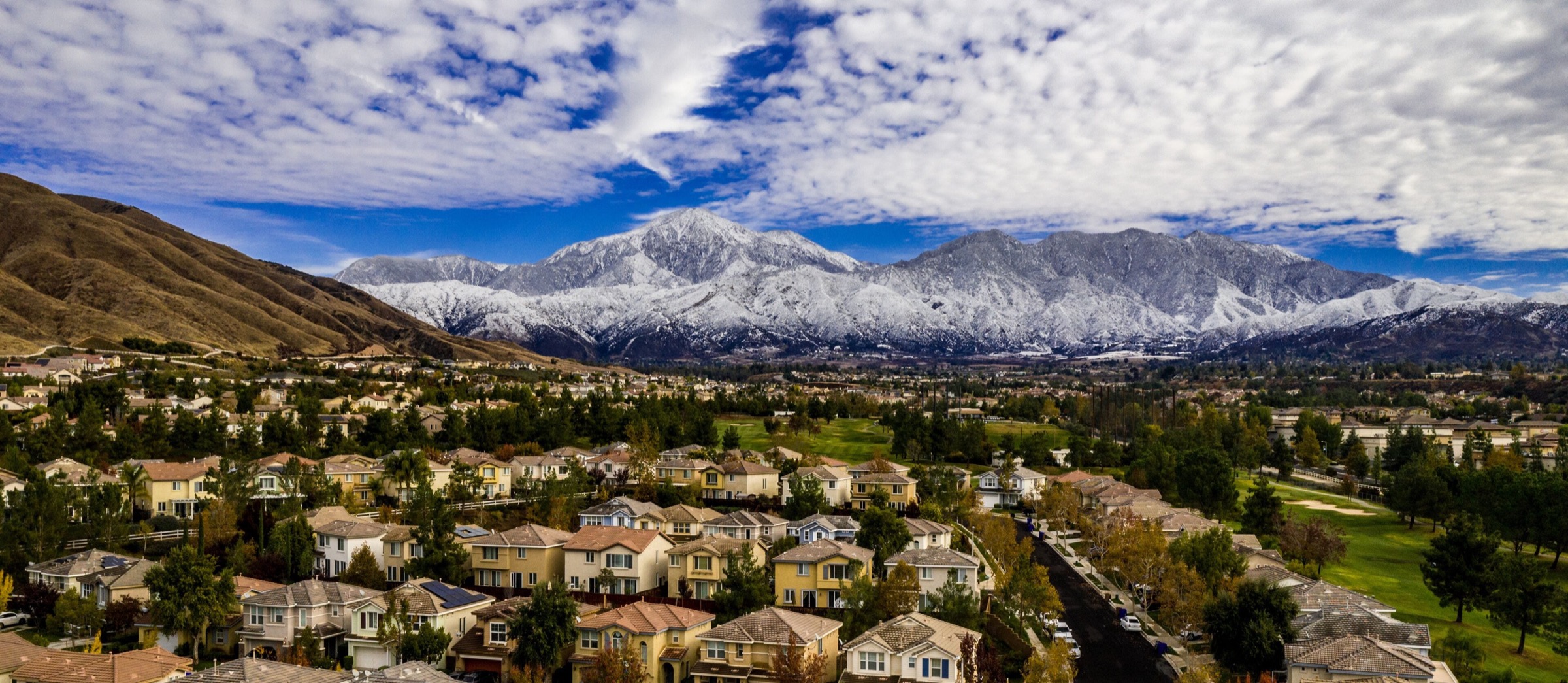
We are based in Yucaipa and we work San Bernardino County, Riverside County and the eastern edge of Los Angeles County. Older neighborhoods here have cast-iron sewer laterals and galvanized supply lines that are well past their service life, and the newer tracts have their own habits. Knowing which is which is half of a fast diagnosis.
San Bernardino County
Home county and most of our work. Yucaipa, Redlands and San Bernardino carry a lot of 1950s to 1970s housing, which means cast-iron laterals and galvanized supply at the end of their service life.
We work Yucaipa, Redlands, Highland, Loma Linda, San Bernardino, Colton, Rialto, Fontana and the rest of the county.
Riverside County
Calimesa and Beaumont sit minutes from the shop, and the newer tracts out toward Moreno Valley and Corona bring their own habits: slab construction, and septic still in use where the sewer never reached.
We work Calimesa, Beaumont, Banning, Riverside, Moreno Valley, Corona, Norco and the rest of the county.
Los Angeles County
The eastern edge, out through the Pomona Valley. Older foothill housing with mature trees, which is root intrusion in sewer laterals more often than anything else.
We work Pomona, Claremont, La Verne, San Dimas, Glendora, West Covina and the rest of the county.
What people ask before they call
If yours is not here, call and ask. We would rather talk it through than have you guess.
Do you really answer at 2 a.m.?
Yes. We take emergency calls 24 hours a day, 7 days a week, across Yucaipa and the Inland Empire. Burst pipes, sewage backups and gas leaks do not wait until Monday, so neither do we.
What does it cost to come out and look?
You get the number before any work begins. You will know what the job is and what it takes to fix it before you commit to anything.
How often does a septic tank need pumping?
Most tanks want pumping every three to five years, depending on how many people are in the house and how much water you use. Heavier-use properties need it more often. If you are not sure when yours was last done, an inspection will tell us.
Do you have to dig up my yard to find a leak?
Usually not. We run a waterproof high-definition camera down the line, or use leak detection equipment through the slab, and find the spot first. Digging before you know where the problem is how a small repair turns into a big one.
Can you handle septic as well as plumbing?
Yes, and it is a big part of what we do. We are licensed for sanitation systems, so tanks, leach lines and the plumbing that feeds them are all one contractor.
Do you work on commercial buildings, not just houses?
Yes. We handle offices, apartment complexes, hotels, restaurants and industrial water and drainage systems, alongside the residential side. Commercial work runs on its own schedule and we plan around your tenants and your business hours.
Call the shop. A person picks up.
Forty-four years in Yucaipa, still the same family, still the same number. Tell us what it is doing and we will tell you what it takes to fix it. Plain language, no sales pitch, and the number before we start.
Yucaipa, California · Serving San Bernardino, Riverside and eastern Los Angeles counties · Open 24 hours